Customer story
How Ryan Schmidt Uses HumanStandard to Takedown AI Music Derivatives

“As my practice has become increasingly focused on protecting human creators from unauthorized AI-generated music, HumanStandard has become an indispensable part of my enforcement toolkit.”
120M+
combined streams on the original
3M
streams on the derivative when removed
$15K+
royalties likely diverted
10+
AI derivatives from one recording
About Ryan Schmidt
Ryan Schmidt is a music and entertainment attorney whose boutique practice is built around protecting human creators. Known for a creator-first approach to copyright enforcement, including AI-generated music disputes, the firm represents artists, songwriters, producers, and other rights holders in complex music industry matters. Schmidt has successfully resolved AI-related disputes through takedowns, licensing negotiations, and enforcement actions, making HumanStandard a natural fit for the firm’s evidence-driven enforcement practice.
Opportunity
In AI music copyright enforcement, delays can make infringement exponentially more difficult to contain. That was tested when a client found an unauthorized AI-generated derivative of their Billboard-charting record which had already racked up over one million streams. To make matters worse, that same profile contained at least ten additional AI-generated derivatives of the same recording, all diverting royalties away from the rights holders. None of the new audio matched the original because the recordings had been manipulated through the use of audio-to-audio AI models. That meant that traditional audio fingerprinting would not have caught these uses. The firm strongly suspected the recordings were unauthorized AI derivatives, but lacked reliable evidence demonstrating they had been generated from the client’s original sound recording.
Here is an example of what that sounds like, drawn from HumanStandard’s own catalog. The first track is The Outsider by Rasha. The second is an AI derivative generated from it. Press play on both.
The Outsider — Rasha
Original recording
AI derivative
Generated from the original
Existing detection tools offered little help. They could not reliably identify AI-derived recordings, created risks involving false positives, and could not meet the firm’s evidentiary standards for enforcement.
Why Ryan Schmidt Chose HumanStandard
“I’ve relied on it in real-world disputes because, unlike any other solution I’ve used, it provides accurate, litigation-ready analysis that gives me evidence I can confidently stand behind.”
Solution
CEO & Founder of HumanStandard, Rasha Rahman, demoed and handed an early version of the AI-derivative detection model and certification to Schmidt, months before this matter arrived.
Over the course of the beta, Schmidt tested HumanStandard across a range of use cases in active client matters, including:
- Screening suspect uploads for AI generation
- Comparing derivatives against the original recordings
- Building takedown submissions for distributors
- Negotiating remix licenses
- Creating certified evidentiary reports
In this matter, the suspected infringing recordings were identified as AI-generated, and HumanStandard’s analysis concluded, to a high degree of confidence, that they were derived from the client’s original sound recording. The model behind that comparison was trained on hundreds of thousands of AI derivatives paired with the songs they came from. Every song in that training set was licensed.
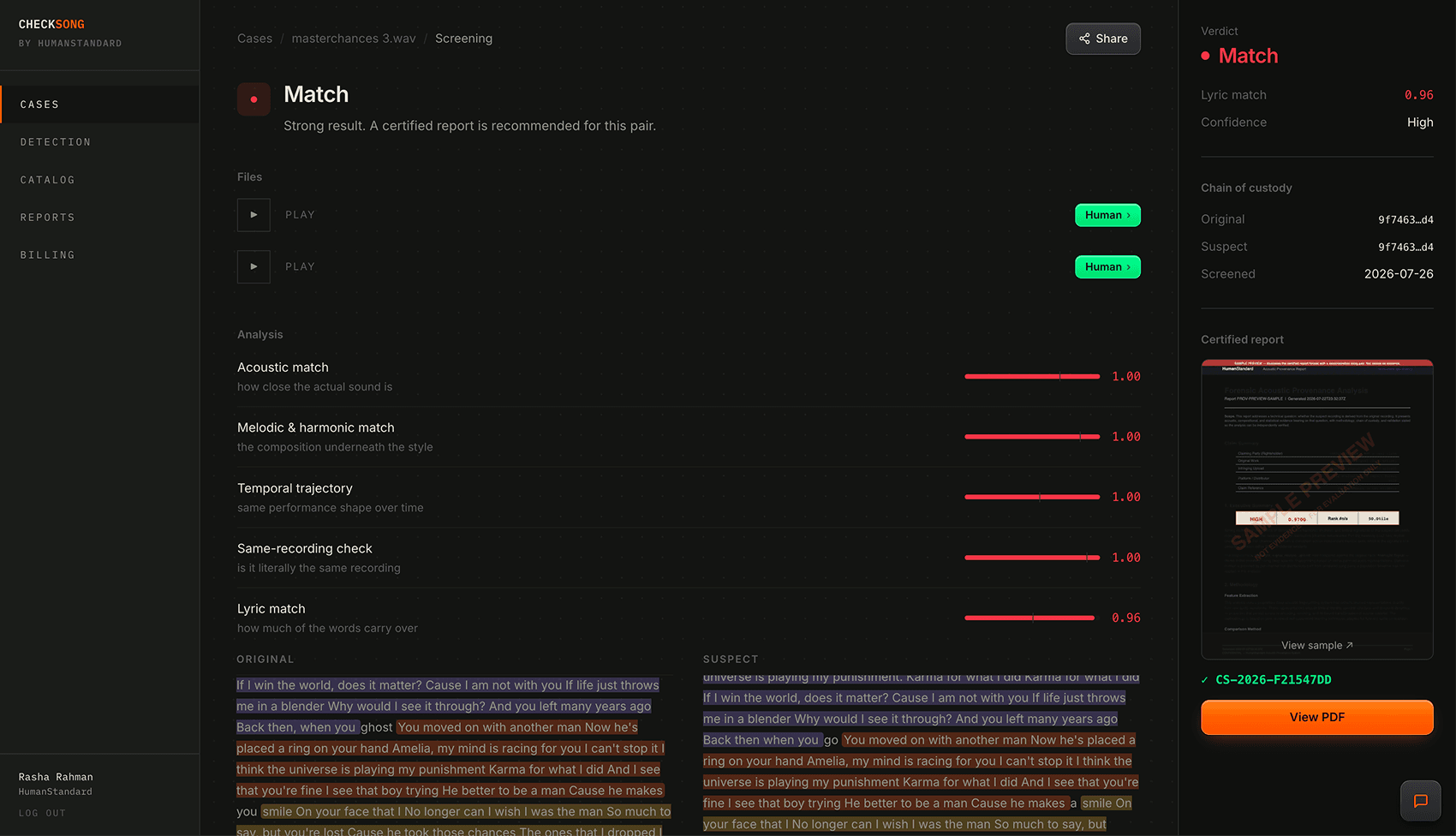
A derivative-match result in CheckSong: the verdict, the signals behind it, and both recordings side by side.
“What sets HumanStandard apart is its deep understanding of today’s AI music ecosystem. It recognizes not only the differences between AI music models, but also the techniques bad actors use to evade detection.”
Today, HumanStandard is deeply embedded in the firm’s workflows, producing measurable gains in the quality of evidentiary output, investigation efficiency, and successful client outcomes. Time and expense once lost to manual comparison is reinvested into high-value work such as negotiating licenses, advising clients, preparing enforcement actions, and pursuing new claims.
Winning New Takedowns
The firm then built a clear, documented complaint around the HumanStandard report and submitted it to the major distributor hosting the infringing recording. That distributor reviewed the HumanStandard-supported submission and removed the reported recording from distribution. The matter demonstrated that HumanStandard’s reports could support successful real-world enforcement with a major digital distributor.
Accelerated Strategic Licensing
Rather than treating every infringement solely as an enforcement matter, the firm evaluates whether licensing can produce a better commercial outcome for the client.
From One Practice to a Platform
Schmidt ran these matters with HumanStandard over email and file transfers for months. The HumanStandard team observed the firm’s investigation process — from collecting original recordings and screening suspect uploads to comparing derivatives and assembling evidence — and used those real-world workflows to help shape CheckSong.
CheckSong was designed to scale the investigation workflow Schmidt developed during beta testing. It runs the engine he used in beta, and it lets a legal team, label, or publisher run the whole case in one place, from uploading a suspect track to downloading a certified report for takedowns and royalty rerouting.

Cases in CheckSong follow Schmidt’s workflow: the client’s song, the accused uploads, and where each scan stands.
Impact
Results
- One AI derivative successfully removed from distribution.
- Multiple AI derivatives converted into a royalty-generating license for clients.
- The same evidentiary foundation supported both outcomes.
HumanStandard is now part of the firm’s standard workflow for evaluating suspected AI-generated music disputes.
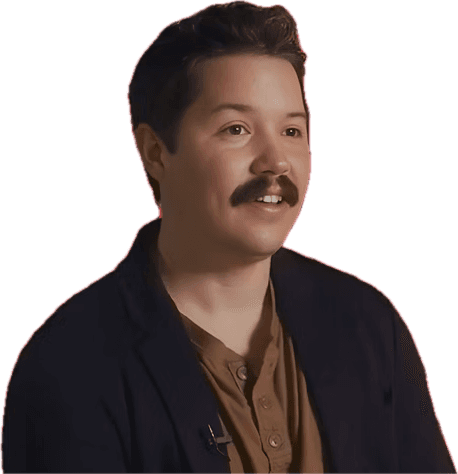
“Combined with its forensic-level reporting, it is, in my opinion, the most reliable AI music detection platform on the market and an essential resource for protecting the rights of human creators.”
Closing
Schmidt plans to continue working with Rahman and HumanStandard on new matters as AI-generated music disputes become increasingly common across the music industry.
Learn more about Ryan Schmidt and his work protecting artists, labels, publishers, and music companies. Follow both Rahman and Schmidt as they share a lot of their knowledge in public on their Instagrams: @_rashaaa and @ryanschmidt.esq.
Unlock litigation-ready evidence for your own music clients
CheckSong is the platform we built around Ryan’s work. Vault your catalog, screen suspects, and generate certified reports.
Set up an account